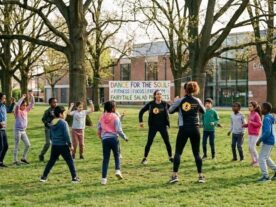
The M³ Method is a structured dance facilitation framework designed to support emotional wellbeing, learning mindset & physical engagement in workshop settings. The approach recognises that students do not arrive in the studio or classroom as “blank slates”; they bring their current mood, attention levels, and physical readiness with them. By addressing these three areas intentionally, the Waggle Dance facilitator can create a more inclusive and effective learning environment. Meeting students where they are.
The three-pillar framework supports students’ emotional wellbeing, learning mindset and physical engagement, creating a holistic approach to dance education.
1. Mood
(Emotional readiness and wellbeing)
The session begins by acknowledging and observing the emotional state of the group. Mood can significantly affect participation, confidence, and participants behaviour. By recognising this at the start of a session, students feel seen and supported.
Practical strategies include:
- A simple mood check-in using a 1–5 scale
- Observing facial expression and body language
- Creating a supportive atmosphere where students feel safe to participate
Throughout the session, the facilitator monitors shifts in mood. Indicators of positive change may include:
- more open body language
- increased participation
- visible relaxation or enjoyment
The aim is not to force positivity but to create conditions where students can move towards a more regulated emotional state through movement and creative expression.
2. Mind
(Focus, mindset, and engagement with learning)
The Mind pillar addresses attention, mindset, and the ability to engage with tasks. In many learning environments—particularly post-pandemic—students in schools can struggle with concentration, listening skills, and confidence when working collaboratively.
Strategies that support the Mind pillar include:
- co-creating a class contract with students
- encouraging reflection and feedback
- giving students agency within tasks
For example, students may be invited to:
- evaluate their own work
- observe and respond to their peers
- suggest music for future warm-ups or cool-downs
These approaches shift students from passive participation into active thinking and ownership of the creative process, supporting both behaviour management and deeper engagement with their own learning.
3. Movement
(Physical engagement and embodied learning)
Movement is the core learning tool within the M³ framework.
Dance provides a physical outlet that supports both wellbeing and cognitive development.
Indicators of engagement in the Movement pillar may include:
- picking up choreography more quickly over time
- copying movements and then adding personal variation
- working physically enough to increase heart rate and sweat
- collaborating effectively within group tasks
Movement activities may include:
- storytelling through dance
- choreographic exploration
- repetition and refinement of sequences
- responding to music or narrative prompts
Through movement, students experience fitness, focus and freedom—three values that
underpin our facilitation practice.
Why the M³ Method Works
By integrating Mood, Mind and Movement, the facilitator can respond to the whole student rather than focusing only on the final performance outcome. The structure allows the session to remain purposeful while adapting to the needs of the group.
This framework supports:
- improved student wellbeing
- stronger behaviour regulation
- deeper creative engagement
- and a positive relationship with movement and dance
It’s been a good deep dive into behaviour management systems at Waggle Dance Co HQ and looking into how we structure our creative dance classes/ workshops going forward. If you see this as being beneficial in your classrooms or in your community setting why not get in touch and we will ensure to design a dance programme tailored to you!
See you on the dancefloor, Jess